


History of the Creation of Our Constitution
Before discussing the history of the creation of the Constitution of the Republic of Uzbekistan, it is appropriate to answer the question: “What is a Constitution?”
The Constitution (from the Latin Constitution – structure, order) is the Basic Law of the state. It defines the state structure, the system of government and administration, their powers and the procedure for their formation, the electoral system, the rights and freedoms of citizens, the relationship between society and the individual, as well as the judiciary and the relationship between the state and society.
The First Legal Step
The first legal step toward creating the Constitution was granting the Uzbek language the status of the state language.
“A person who does not know his mother tongue does not know his lineage, his roots, and has no future; one who does not know the language of a people cannot know its soul.” “Every nation, big or small, respects its native language.”
The key provisions enshrined in the Law “On the State Language” were later reflected in Article 4 of the Constitution:
“The state language of the Republic of Uzbekistan is the Uzbek language. The Republic of Uzbekistan ensures respect for the languages, customs, and traditions of all nationalities and ethnic groups residing in its territory and creates conditions for their development.”
The Second Legal Step
The second step was the establishment of the presidential institution and the formation of a commission to prepare new state symbols.
The Third Legal Step
The third step was the adoption of the “Declaration of Independence.”
Article 8 of the Declaration, adopted by the Supreme Council of Uzbekistan on June 20, 1990, states that Uzbekistan “determines its own path of development, its own name, and establishes its own state symbols (coat of arms, flag, anthem).”
The Fourth Legal Step
The fourth step was the creation of the Constitutional Commission.
The Fifth Legal Step
The fifth step was closely connected with the First President’s visit to India in 1991.
Despite the difficult conditions on the eve of independence — political, economic, and social hardships and various obstacles — our people continued to move steadily toward their age-old dream of state sovereignty and independence. Important rules and principles reflected in presidential decrees and resolutions of that turbulent period later formed the basis of sections, chapters, and articles of our Constitution.
The Sixth Legal Step
The sixth step was the proclamation of state independence.
The speech of the head of state on August 31, 1991, at the extraordinary session of the Supreme Council, especially the historic words:
“I propose that from this day on, 1 September be declared Independence Day, a national holiday,”
were forever inscribed in the history of our Motherland.
On the same day, the constitutional law “On the Foundations of State Independence of the Republic of Uzbekistan” was adopted. It included several key provisions that later became part of the Constitution. For example:
-
“The Republic of Uzbekistan possesses full state power, independently determines its national-state and administrative-territorial structure, and the system of government and administration” (Article 3).
-
“In the Republic of Uzbekistan, the Constitution and laws of the Republic have supremacy. The system of state bodies is based on the principle of separation of powers into legislative, executive, and judicial branches” (Article 5).
This law served as a small Constitution until the adoption of the new Constitution on December 8, 1992.
The Seventh Legal Step
The seventh step was the presidential election and the referendum on state independence held on December 29, 1991.
The people supported independence and elected the President. On January 4, 1992, the ninth session of the Supreme Council convened to discuss the results of the election and referendum.
The Eighth Legal Step
The eighth step was the first publication of the draft Constitution for public discussion.
After publication, the draft was widely discussed. These discussions, held from late September to early December 1992, became an important and practical school of democracy in Uzbekistan.
The Constitutional Commission received nearly 600 letters. More than 100 articles about the draft Constitution were published in the press. The number of suggestions submitted by citizens exceeded 5,000.
The Ninth Legal Step
The ninth step was the second publication of the revised draft Constitution for public discussion.
This allowed citizens to see how their previous suggestions and comments had been considered. Many ideas submitted during the first stage were reflected in the updated version.
The Tenth Legal Step
The tenth step was the adoption of the Constitution.
On December 6, 1992, the Constitutional Commission held the final discussion of the draft. After detailed debates and amendments, deputies of the parliament adopted the Basic Law on December 8, 1992.
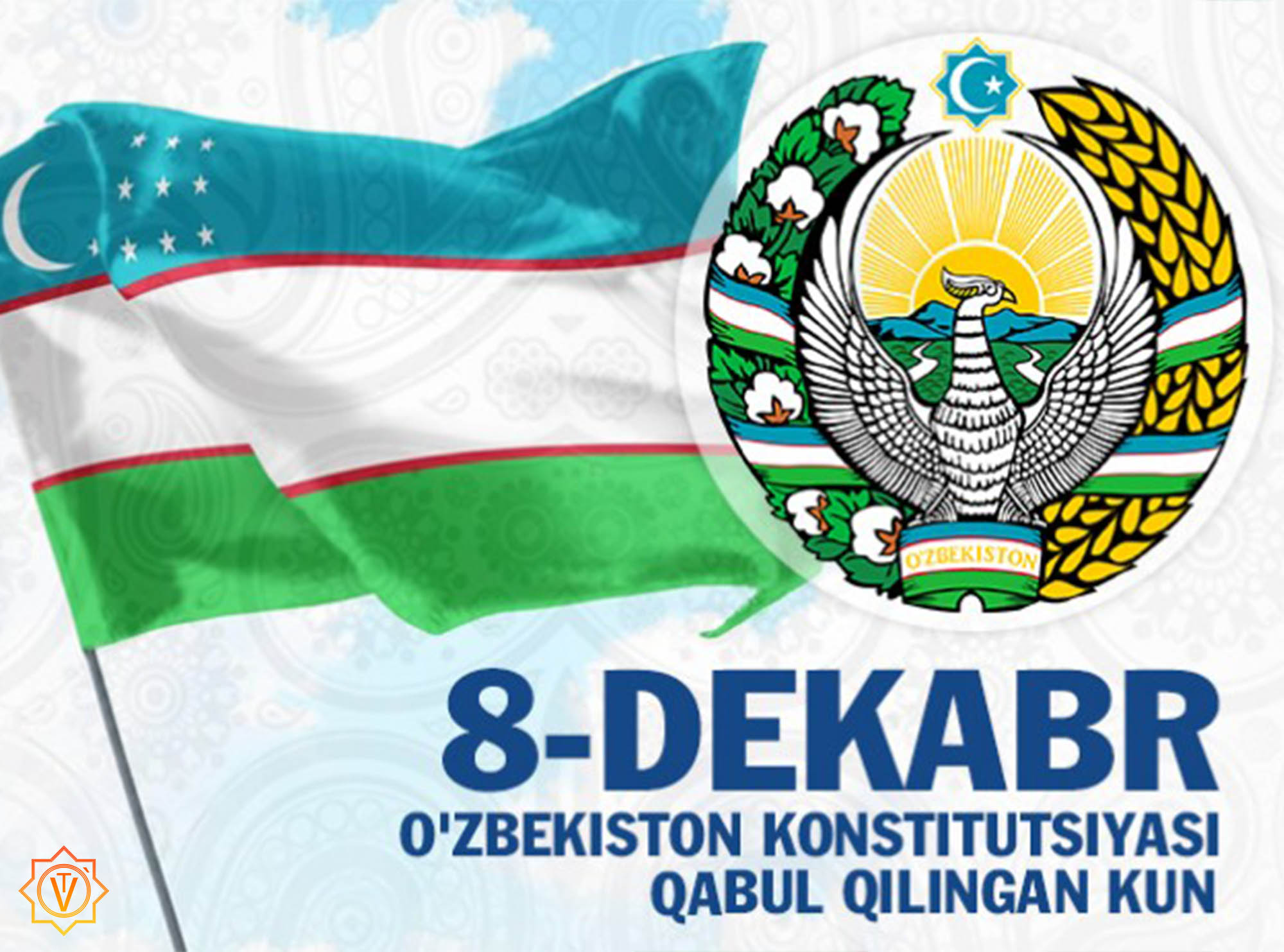
From that day on, 8 December became Constitution Day, a national holiday.
The first Constitution of independent Uzbekistan established and strengthened the reliable legal foundations of the new sovereign society.